Dog Scared of Fireworks or Thunderstorms? Calming Tips That Help
Fireworks and thunderstorms can be frightening for dogs. Here's how to prepare a safe den, get through the noisy night calmly, and know when to ask your vet for extra help.
Is your dog scared of fireworks? You're in good company. One loud bang and even the boldest pup can turn into a trembling shadow behind the sofa. Thunderstorms can have the same effect, and because neither can be switched off, it's easy to feel a bit helpless as an owner.
The good news is that there's plenty you can do. A little preparation, a safe place to hide and some calm company can make a noisy evening much easier. Here's how to get ready, what to do on the night, and when it's worth asking your vet for extra help.
Why is my dog scared of fireworks and thunder?
Dogs hear far more than we do, so a bang that makes us jump can feel huge to them. Fireworks and storms are also loud, sudden and impossible to predict. There's no warning, no visible cause and no way to get away from the noise, which is exactly what makes them so unsettling.
Storms bring extra clues too, such as flashes of light, drumming rain and gusts of wind. Some dogs start to look worried well before the first rumble, as if they know what's coming.
Signs your dog is feeling anxious
Every dog shows fear a little differently. Watch out for:
- Trembling, panting or drooling when it isn't hot
- Pacing and being unable to settle
- Hiding, or sticking to you like glue
- Whining, barking or howling
- Flattened ears and a tucked tail
- Refusing food or treats they normally love
- Scratching at doors or trying to run away
The quieter signs are easy to miss. A dog who simply lies very still and won't take a treat may be just as worried as one who is pacing around the room.
Before the noise starts: how to prepare
Most of the helpful work happens before the first bang, so start as soon as you can. If you know a big night is coming, a few days of preparation is better than none.
Build a cosy den
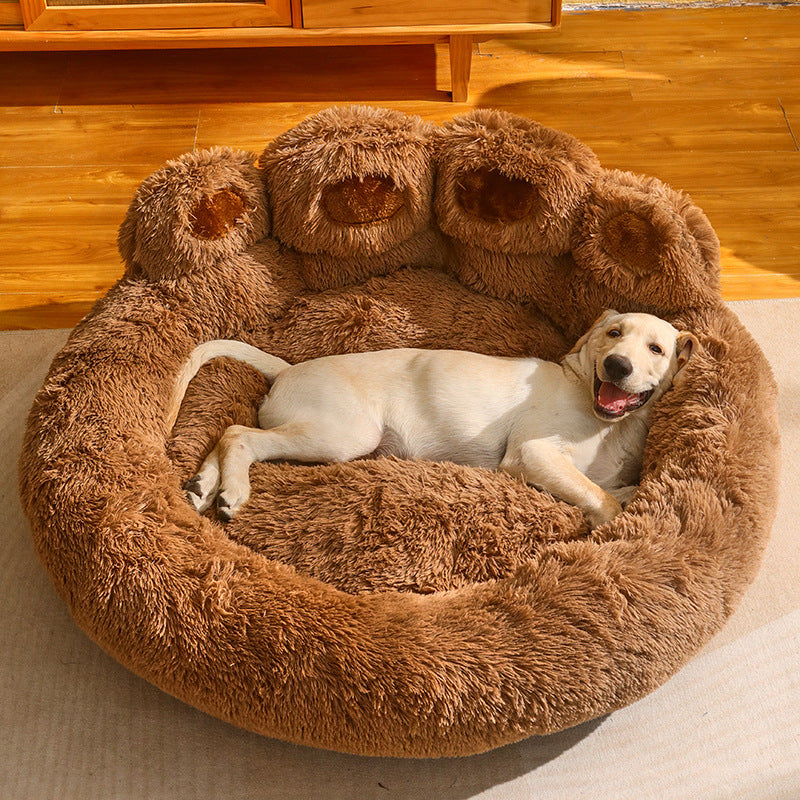
Many dogs want to hide when they're frightened, so give them a good place to do it. Pick a quiet corner, ideally in an inner room with few windows, and set it up well in advance so it already feels familiar.
- Add a bed they already like, or a covered one such as our Fluffy Cave Bed for small dogs.
- Drape a blanket over a table or an open crate to make it darker and more muffled.
- Add a worn jumper of yours, which smells comfortingly of you.
- Keep water close by, and leave the way in and out open so they never feel trapped.
You'll find more snug options in our Sleep & Cuddle collection.
Check the practical things
A frightened dog may bolt, even one who has never done it before. Make sure their collar and ID tag are on and up to date, that their microchip details are current, and that your garden has no gaps in the fence.
Try gentle sound training
For the long term, some owners teach their dog that bangs aren't so scary. Play recorded firework sounds very quietly while your dog is relaxed, and pair them with treats and play. Raise the volume only over many short sessions, and go back a step if your dog looks uneasy. If rewards are new to you both, our beginner's guide to clicker training is a friendly place to start. Leave this for the quiet months, though, as it won't work in the middle of firework season.
Quick tip: check local event listings and the weather forecast each morning during firework or storm season. Knowing what's ahead means you can plan the walk, the dinner and the den before your dog ever hears a thing.
On the night: calming tips for anxious dogs
When the noise begins, your aim is simple: keep things safe, quiet and as normal as possible.
Walk early and feed early
Take your dog for a good walk in daylight, well before the fireworks are likely to start. A satisfying walk can help them settle later on. Serve dinner earlier than usual too, as an anxious dog may not want to eat once the noise begins.
Close up the house
- Shut windows, doors and cat flaps, and double-check them before dark.
- Draw the curtains so that flashes of light stay outside.
- Turn on the TV, the radio or some soft music to soften sudden bangs.
- Take your dog out to the toilet on a lead, even in your own garden.
Offer something to lick or sniff
Licking and sniffing are natural, soothing activities, and they give your dog something else to think about. Set these up before the noise starts, while your dog is still relaxed enough to enjoy them.
- Lick mats: spread a little yoghurt or wet food on a Calm Lick Mat and stick it to a tile or the floor. If you use peanut butter, check that it's free from xylitol, which is toxic to dogs.
- Snuffle mats: hide some kibble or treats in an Avocado Snuffle Mat and let your dog hunt them out.
Please don't worry if your dog ignores them once the bangs begin. Being too anxious to eat is common, so simply try again during a quiet spell.
Stay close and stay calm
You can't spoil a frightened dog by comforting them. If they come to you for a cuddle, give them one. If they would rather hide, let them, and don't try to coax them out. Speak in your normal voice and carry on with your evening, as your relaxed mood can be reassuring.
A few things are best avoided:
- Never scold or punish a scared dog, as this only adds to their fear.
- Don't leave your dog home alone on a big firework night if you can help it.
- Don't take them along to a display or leave them outside, even for a short time.
- Don't tie them up or shut them in a small space they can't leave.
When to talk to your vet
Comfort and cosy dens help many dogs, but they aren't a cure, and some dogs need more support. Speak to your vet if your dog panics, hurts themselves trying to escape, stays upset long after the noise has stopped, or seems to be getting worse each year. A sudden new fear of noise is also worth mentioning, especially in an older dog, as discomfort or illness can sometimes play a part.
Try to book that chat a few weeks ahead of the busy season if you can. Your vet can talk you through the options, or refer you to a qualified behaviourist. Please don't give your dog any human medicines or calming products without checking with your vet first.
A calmer night for everyone
You may not be able to stop the bangs, but you can change how they feel for your dog. Prepare their den early, plan your day around the noise, offer something soothing to do, and be there when they need you. With a little practice, a noisy night can become something you both get through together, ideally with lots of cuddles at the end of it.

Pet people sharing simple tips for a happy everyday life with dogs and cats.